

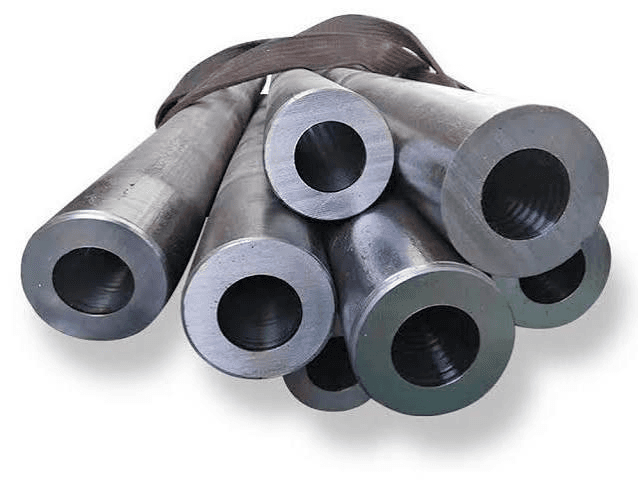
High-Temperature Alloy Steel Pipes: Extreme Thermal Endurance & Oxidation Resistance
High-temperature alloy steel pipes are specialized heat-resistant tubular systems engineered specifically to operate under continuous mechanical load in extreme temperature environments ranging from 500°C up to 650°C (1200°F) and higher.
Formulated with balanced alloy chemistries—including high Chromium (up to 9–12%), Molybdenum, Tungsten, Vanadium, Niobium, and micro-alloyed Boron—these advanced ferritic-martensitic tubulars prevent severe thermal creep, intergranular oxidation, microstructural coarsening, and thermal shock degradation.
Manufactured in compliance with ASTM A335 (Grades P91, P92, P122), DIN EN 10216-2, and ASME Section I Power Boilers, our high-temperature alloy steel pipes are the primary structural material for ultra-supercritical (USC) thermal power plants, industrial fired heater coils, gas turbine exhausts, and chemical thermal cracking furnaces.
Advantages of High-Temperature Alloy Steel Pipes
Engineered for maximum operational reliability, high structural integrity, and economic efficiency across challenging applications.
Extreme Creep-Rupture Strength
Fine MX carbonitride precipitates and Laves phases pin grain boundaries, halting high-temperature dimensional creep under prolonged stress.
Oxidation & Scaling Resistance
High chromium content (9–12%) creates a self-healing, adherent chromia oxide film that resists scaling in hot combustion gases up to 650°C.
Thermal Fatigue Resilience
Significantly higher thermal conductivity and lower thermal expansion compared to austenitic stainless steel minimizes cyclic thermal fatigue cracking.
Lighter Structural Wall Designs
Higher allowable design stress values enable engineers to specify thinner pipe walls, reducing dead weight and boiler support structural costs.
Controlled Computer Heat Treatment
Precise multi-stage normalizing (1040°C–1080°C) and tempering (750°C–780°C) produces an optimal tempered martensite microstructure.
Certified Elevated-Temperature Traceability
Every heat is documented with hot-tensile test reports, Charpy impact toughness, hardness surveys, and EN 10204 3.1 certification.
Types of High-Temperature Alloy Steel Pipes
Ultra-supercritical power piping, fired heater coils, and heavy-gauge thermal manifolds engineered for service up to 650°C.
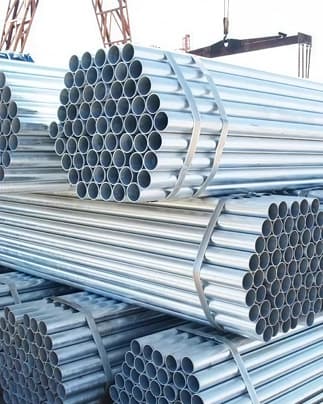
P91 High-Temperature Boiler Pipes
P92 Tungsten-Modified USC Power Pipes
Fired Heater & Reformer Alloy Tubulars
Heavy-Wall High-Temperature Header Spools
Technical Specifications & Standards
High-temperature alloy steel pipes are available in diverse pressure ratings, schedules, and certified international specifications.
| Applicable Standards | ASTM A335, ASME SA335, EN 10216-2 (X10CrMoVNb9-1), DIN 17175, BS 3604, ISO 9329-2 |
| Primary High-Temp Grades | ASTM A335 Grade P91 (Type 1 & 2), Grade P92 (UNS K92460), Grade P122, Grade P23, Grade P24 |
| Nominal Diameters (NPS) | 1/2" NB to 24" NB (Seamless); 16" NB to 64" NB (Electric-Fusion-Welded EFW) |
| Wall Thickness Schedules | SCH 40, SCH 80, SCH 100, SCH 120, SCH 140, SCH 160, SCH XXS, and custom wall thicknesses up to 55mm |
| Heat Treatment Condition | Normalizing at 1040°C–1080°C followed by air cooling and Tempering at 730°C–780°C (minimum 1 hour hold) |
| End Preparations | Beveled Ends (BE 37.5° per ASME B16.25 for orbital butt welding), Plain End (PE), Square Cut |
| Hardness Control | Controlled between 196 HBW (min) and 250 HBW (max) to guarantee adequate tempering without under-tempered brittleness |
| Mandatory Quality Tests | 100% Hydrostatic test, 100% Ultrasonic NDT, Hot tensile test (at 600°C), Charpy V-Notch impact, Spectro PMI |
Major Industrial Applications
High-temperature alloy steel pipes provide uncompromised reliability across supercritical power plants and refinery crackers:
Ultra-Supercritical (USC) Power Boilers
Main steam headers, superheater outlet headers, and reheater steam lines operating above 600°C.
Industrial Steam Turbine Bypass Circuits
High-pressure, high-velocity turbine bypass manifolds and steam attemperator piping.
Petrochemical Cracking Furnaces
Ethylene cracking coils, pyrolysis furnace radiant tubes, and thermal visbreaker transfer lines.
Heat Recovery Steam Generators (HRSG)
Combined-cycle gas turbine waste heat boiler high-pressure steam distribution headers.
Coal Gasification & Syngas Units
High-temperature syngas coolers, slag tap piping, and gasifier quench chamber headers.
Nuclear Power Auxiliary Steam Loops
Secondary steam circuits and high-temperature auxiliary safety headers in nuclear installations.
Why Choose Apex Engineering for High-Temperature Alloy Steel Pipes?
In severe service networks, choosing a certified manufacturer guarantees precise tolerances and complete reliability for High-Temperature Alloy Steel Pipes.
Extreme Creep-Rupture Strength
Fine MX carbonitride precipitates and Laves phases pin grain boundaries, halting high-temperature dimensional creep under prolonged stress.
Oxidation & Scaling Resistance
High chromium content (9–12%) creates a self-healing, adherent chromia oxide film that resists scaling in hot combustion gases up to 650°C.
Thermal Fatigue Resilience
Significantly higher thermal conductivity and lower thermal expansion compared to austenitic stainless steel minimizes cyclic thermal fatigue cracking.
Lighter Structural Wall Designs
Higher allowable design stress values enable engineers to specify thinner pipe walls, reducing dead weight and boiler support structural costs.
Controlled Computer Heat Treatment
Precise multi-stage normalizing (1040°C–1080°C) and tempering (750°C–780°C) produces an optimal tempered martensite microstructure.
Certified Elevated-Temperature Traceability
Every heat is documented with hot-tensile test reports, Charpy impact toughness, hardness surveys, and EN 10204 3.1 certification.
Frequently Asked Questions
Key questions and answers regarding High-Temperature Alloy Steel Pipes, P91/P92 creep behavior, and thermal fatigue.
Ferritic-martensitic alloy steels (such as P91 and P92) possess approximately double the thermal conductivity and significantly lower thermal expansion coefficients compared to austenitic stainless steels (such as TP304H or TP316H). This substantially reduces thermal gradient stresses across pipe walls during boiler startup and load cycling, preventing thermal fatigue cracking and extending boiler operational longevity.
Looking for High-Temperature Alloy Steel Pipes for Your Project?
Contact our power piping metallurgy specialists with your required grade (P91, P92, P122), pipe schedule, dimensions, and project design parameters for mill-direct pricing and certified technical compliance documentation.